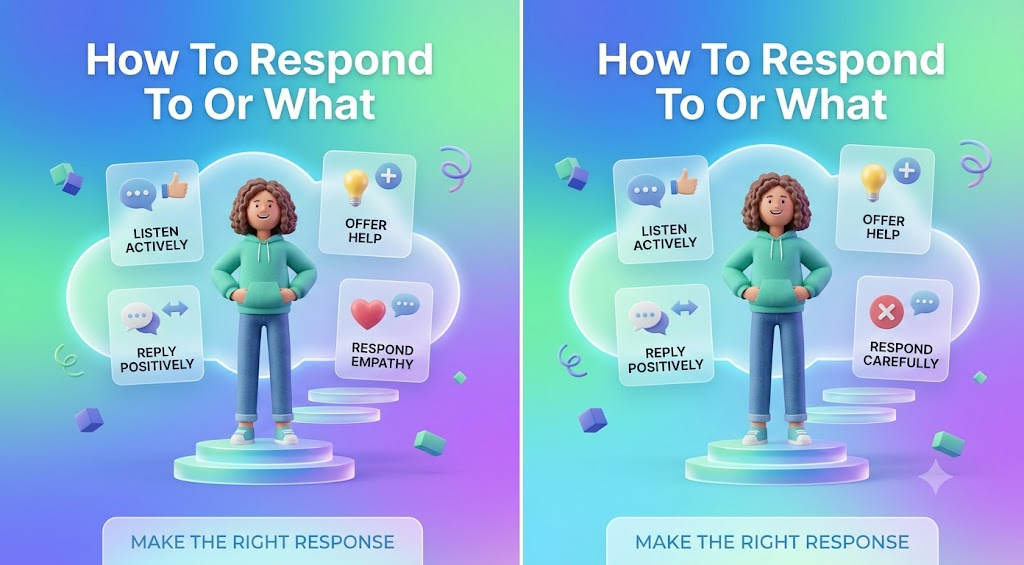
Smart How To Respond To Or What Conversation Tips
Conversations often take unexpected turns, leaving you wondering what to say next. Knowing How To Respond To Or What to say can help you avoid awkward silence and keep discussions flowing naturally. Whether you’re chatting with friends, coworkers, family members, or someone you just met, thoughtful responses create stronger connections.
Many people overthink conversations because they fear saying the wrong thing. Fortunately, there is no single perfect response for every situation. The key is understanding the context, reading the other person’s tone, and replying with confidence. This guide explains practical techniques that make conversations easier and more enjoyable.
Why Good Responses Matter
Every response influences the direction of a conversation. A kind, engaging reply encourages the other person to continue talking, while a cold or confusing answer can end the discussion quickly. Learning How To Respond To Or What someone says helps build trust and meaningful relationships.
Strong communication also improves your personal and professional life. Whether you’re networking, dating, studying, or working, clear responses show confidence and emotional intelligence. People naturally enjoy talking with someone who listens carefully and replies thoughtfully.
Listen Before You Reply
One of the biggest communication mistakes is preparing an answer before the other person finishes speaking. Active listening helps you understand their actual message instead of making assumptions. It also shows respect and genuine interest.
Before deciding How To Respond To Or What someone says, pay attention to their words, facial expressions, and tone. These details reveal emotions that simple words may not express. Responding after careful listening creates more natural and helpful conversations.
Understand the Context
The same words can have different meanings depending on the situation. A casual joke between friends requires a different response than the same phrase during a business meeting. Context always matters more than memorized replies.
Think about where the conversation is happening, who you’re talking to, and why they said what they did. Understanding these factors makes it much easier to know How To Respond To Or What fits the moment without sounding forced.
Ask Questions When Unsure
Sometimes the best response isn’t an answer at all. Asking a thoughtful question keeps the conversation moving while helping you understand the other person’s thoughts. People usually appreciate someone who wants to learn more.
Simple questions like “What do you mean?” or “Can you tell me more?” prevent misunderstandings. If you’re unsure How To Respond To Or What someone expects, asking for clarification is often the smartest choice.
Respond with Empathy
Empathy means recognizing another person’s feelings before offering your opinion. Even if you disagree with someone, acknowledging their emotions creates a respectful conversation. People often remember how you made them feel more than your exact words.
When deciding How To Respond To Or What someone shares, imagine yourself in their situation. Saying things like “I understand why you’d feel that way” or “That sounds challenging” helps others feel heard and appreciated.
Keep Your Tone Positive
Your tone matters just as much as your words. A friendly voice and positive attitude make conversations comfortable, while sarcasm or frustration may create unnecessary conflict. Even online messages should reflect kindness whenever possible.
Learning How To Respond To Or What someone says includes choosing words that encourage rather than discourage. Positive communication doesn’t mean ignoring problems—it means discussing them respectfully and constructively.
Handle Compliments Gracefully
Many people struggle when receiving compliments. Instead of denying kind words or changing the subject, simply thank the person. Accepting compliments confidently shows maturity and appreciation.
If someone praises your work or appearance, respond with gratitude rather than embarrassment. Understanding How To Respond To Or What people say when complimenting you strengthens relationships and encourages positive interactions.
Deal with Criticism Calmly
Criticism isn’t always pleasant, but it can be valuable. Reacting defensively often makes situations worse, while calm responses demonstrate confidence and professionalism. Listen carefully before deciding whether the feedback is useful.
When considering How To Respond To Or What someone criticizes, thank them for their perspective if appropriate. If the criticism is unfair, remain respectful and explain your point without becoming argumentative.
Reply to Unexpected Questions
Surprising questions can catch anyone off guard. Instead of rushing to answer, take a moment to think. A brief pause is perfectly acceptable and often leads to a more thoughtful response.
If you’re uncertain How To Respond To Or What someone unexpectedly asks, it’s okay to say you need a moment or request more information. Honest communication is usually better than guessing.
Keep Conversations Balanced
Healthy conversations involve equal participation. Avoid talking only about yourself, but don’t hesitate to share your own experiences when they add value. Balance creates enjoyable and meaningful discussions.
Knowing How To Respond To Or What someone says also means inviting them to continue speaking. Follow-up questions and genuine curiosity help maintain a natural exchange rather than a one-sided conversation.
Avoid Common Communication Mistakes
Interrupting others, making assumptions, or responding without listening can quickly damage conversations. Another common mistake is giving advice when someone simply wants emotional support. Understanding the difference improves communication significantly.
Before deciding How To Respond To Or What someone shares, ask yourself whether they want advice, comfort, or simply someone who will listen. Responding appropriately strengthens trust and mutual respect.
Respond Professionally at Work
Professional conversations require clarity, respect, and confidence. Whether speaking with a manager, coworker, or client, maintain polite language and stay focused on the topic. Professional communication supports career growth.
Learning How To Respond To Or What colleagues say includes acknowledging ideas respectfully, asking useful questions, and expressing opinions without creating unnecessary conflict. These habits build a positive workplace reputation.
Improve Your Confidence
Confidence grows through practice rather than perfection. Every conversation teaches valuable lessons about communication. Instead of worrying about making mistakes, focus on learning from each interaction.
The more often you practice How To Respond To Or What different people say, the more naturally conversations will flow. Confidence develops gradually as you gain experience in various social situations.
Practice Every Day
Communication is a skill that improves with consistent effort. Talk with friends, family, coworkers, or even customer service representatives to build experience. Every interaction offers an opportunity to become a better communicator.
Challenge yourself to listen carefully, respond thoughtfully, and maintain eye contact when appropriate. Over time, you’ll notice significant improvement in How To Respond To Or What people say during everyday conversations.
Conclusion
Learning How To Respond To Or What someone says isn’t about memorizing perfect answers. It’s about listening carefully, understanding context, showing empathy, and communicating with confidence. These simple habits create stronger relationships and smoother conversations.
Remember that every discussion is unique, so flexibility is essential. By practicing active listening, maintaining a positive attitude, and responding thoughtfully, you’ll become a more confident communicator who can handle conversations naturally in almost any situation.