Smart How To Respond When A Guy Calls You Crazy Tips
Being called “crazy” by a guy can leave you feeling hurt, confused, or even angry. Whether the comment was meant as a joke, an insult, or an attempt to dismiss your feelings, your response matters. Knowing How To Respond When A Guy Calls You Crazy helps you stay calm, protect your confidence, and communicate effectively. Instead of reacting emotionally, you can choose words that reflect self-respect and emotional maturity.
Every situation is different, so there is no single perfect response. The best reply depends on the relationship, the context, and the intention behind his words. This guide will help you understand why someone might use that phrase and show you thoughtful ways to respond without losing your composure.
Why Guys Sometimes Use the Word “Crazy”
Some guys use the word casually without realizing how hurtful it sounds. They may think they are teasing or joking, even though their words can make someone feel invalidated. Understanding the intention behind the comment can help you decide whether the relationship is worth preserving.
In other cases, calling someone crazy is a way to avoid taking responsibility. Instead of addressing your concerns, a person may label your emotions as irrational. Recognizing this behavior allows you to respond with confidence rather than becoming defensive.
Stay Calm Before You Reply
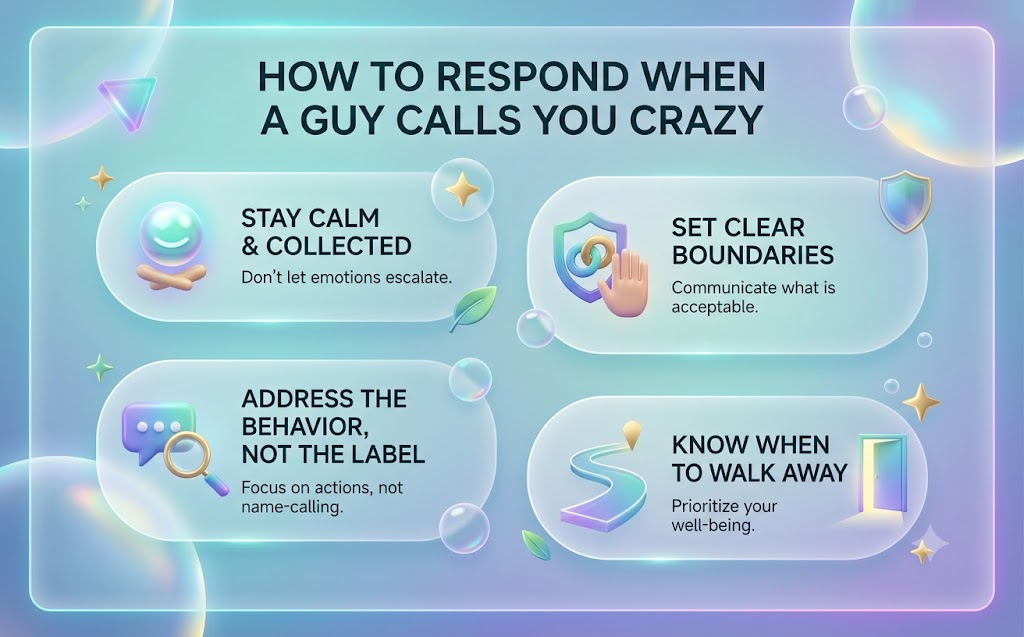
Your first reaction might be to argue or raise your voice, but taking a moment to breathe can prevent unnecessary conflict. Remaining calm shows emotional strength and keeps the conversation from becoming more heated. It also gives you time to choose your words carefully.
When you pause before responding, you avoid saying something you may later regret. A calm response often has more impact than an emotional outburst. Confidence is displayed through self-control, not through shouting or proving someone wrong.
Ask What He Means
Sometimes the simplest response is asking for clarification. You can say, “What do you mean by that?” or “Why do you think I’m crazy?” This encourages him to explain his statement instead of hiding behind a vague label.
His answer will reveal whether he was joking, being careless, or intentionally disrespectful. Once you understand his intention, you can decide whether to continue the conversation or end it respectfully. Clear communication often prevents misunderstandings.
Respond with Confidence
Confidence is one of the strongest responses you can offer. Instead of becoming defensive, calmly explain your perspective without apologizing for your feelings. This shows that you respect yourself and expect the same respect from others.
You might respond by saying, “I’m expressing my feelings, not acting crazy.” Statements like this keep the focus on the issue instead of allowing the conversation to become personal. Confidence often changes the tone of the discussion.
Use Humor If the Situation Allows
If you know he was joking and your relationship is playful, humor can be an effective response. A lighthearted reply can reduce tension while making it clear that you noticed the comment. Just be sure the joke does not hide genuine hurt feelings.
For example, you could smile and say, “If caring makes me crazy, then I guess I’m guilty.” This keeps the mood positive while showing confidence. Humor works best when both people respect each other.
Set Healthy Boundaries
If being called crazy makes you uncomfortable, it is important to say so. Calmly explain that you do not appreciate being labeled in that way. Healthy relationships are built on mutual respect and honest communication.
A simple response like, “Please don’t call me crazy. I’d rather we talk respectfully,” clearly expresses your boundary. Anyone who values the relationship should be willing to respect your request and adjust their behavior.
Recognize Manipulative Behavior
Sometimes calling someone crazy is more than an insult. It can be an attempt to make you question your feelings or reality. This behavior is unhealthy because it shifts attention away from the real issue and places blame on you instead.
If you notice this happening repeatedly, pay attention to the overall pattern rather than a single comment. Consistent disrespect or emotional manipulation should never be ignored. Your feelings deserve to be heard and respected.
Avoid Matching His Negativity
Responding with insults usually makes the situation worse. Calling him names or trying to hurt him back rarely solves the problem. Instead, it creates more conflict and damages communication even further.
Choosing respectful language demonstrates emotional maturity. You can disagree firmly without becoming disrespectful. Maintaining your dignity is always more valuable than winning an argument through harsh words.
Decide If the Relationship Is Healthy
One isolated comment may simply be a misunderstanding. However, repeated insults, dismissive behavior, or constant criticism could indicate a deeper problem. Healthy relationships encourage open conversations rather than personal attacks.
Ask yourself whether he listens to your concerns, apologizes when necessary, and treats you with kindness. If respect is consistently missing, it may be time to reconsider the relationship and prioritize your emotional well-being.
Examples of Good Responses
There are many respectful ways to answer without escalating the situation. You might say, “I don’t think expressing my feelings makes me crazy.” Another option is, “Let’s discuss the issue instead of labeling each other.”
You could also respond with, “I’d appreciate it if we kept the conversation respectful.” These replies keep the discussion focused on communication rather than emotion. They encourage healthier dialogue while protecting your self-respect.
When It Is Better to Walk Away
Not every conversation deserves your energy. If someone refuses to listen, continues insulting you, or intentionally provokes you, ending the conversation may be the healthiest choice. Walking away is sometimes the strongest response.
Leaving the situation does not mean you have lost the argument. Instead, it shows that you value your peace more than unnecessary conflict. Protecting your emotional health is always a wise decision.
Build Emotional Confidence
The more confident you become, the less power hurtful labels have over you. Practice expressing your feelings clearly and respectfully without worrying about how others may judge you. Confidence grows through experience and self-awareness.
Surround yourself with supportive people who value honest communication. Positive relationships remind you that your emotions matter and deserve respect. Strong self-esteem makes it easier to respond calmly during difficult conversations.
Mistakes to Avoid
Avoid assuming every comment is meant to hurt you. Consider the context before reacting because misunderstandings happen. At the same time, do not ignore repeated disrespect simply to keep the peace. Your feelings are important.
Another common mistake is trying to prove that you are not crazy through endless arguments. You do not need someone’s approval to validate your emotions. Focus on expressing yourself clearly and confidently instead.
Conclusion
Learning How To Respond When A Guy Calls You Crazy is about protecting your self-respect while encouraging healthy communication. Whether you choose humor, calm honesty, or firm boundaries, your response should reflect confidence rather than anger. Every conversation offers an opportunity to communicate with maturity.
Remember that respectful people discuss problems instead of using hurtful labels. If someone repeatedly dismisses your feelings or refuses to communicate respectfully, you have every right to step away. Your emotions are valid, and you deserve relationships built on understanding, trust, and mutual respect.