Apna Khet Apna Rozgar Scheme 2026 – Complete Guide to Eligibility, Benefits, and Online Registration
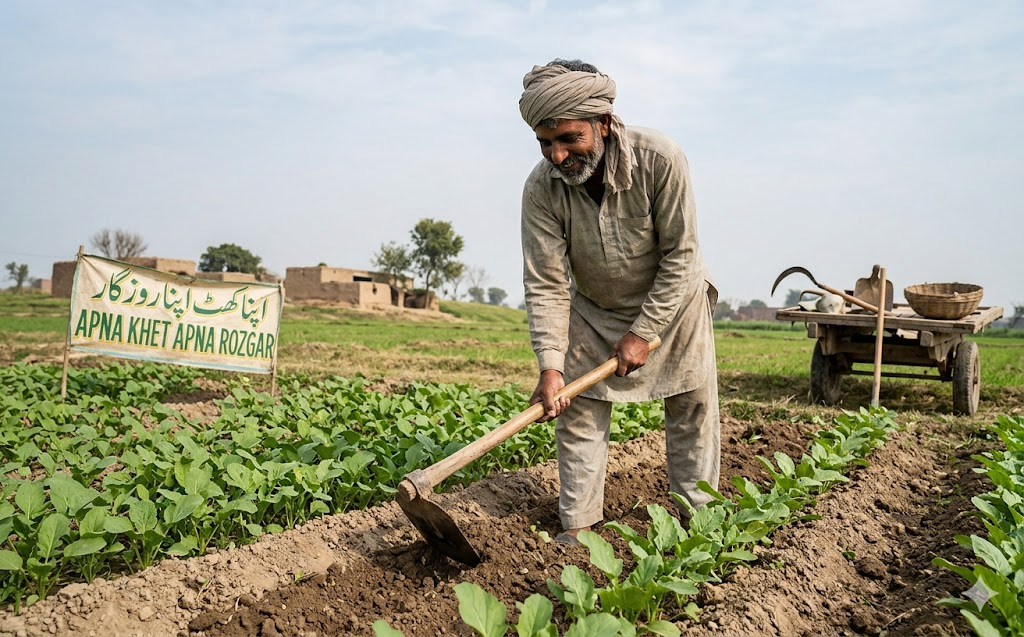
Punjab’s landmark agricultural welfare program, apna khet apna rozgar, is transforming how rural communities access land and livelihood opportunities across the province.
Pakistan’s rural economy has long struggled with a deeply rooted problem — the majority of people who work the land do not own it. Without ownership, there is no collateral for loans, no incentive for long-term soil improvement, and no pathway out of generational poverty. The Punjab government, under Chief Minister Maryam Nawaz Sharif, has directly addressed this challenge through a historic initiative that puts cultivable state-owned land into the hands of those who need it most. The program apna khet apna rozgar represents one of the most significant land redistribution efforts in Punjab since the 1970s, committing an estimated Rs. 160 billion to build agricultural self-reliance across all districts of the province.
What Is the AKAR Scheme and Why Was It Launched
The formal name of the program is the Apna Khet Apna Rozgar (AKAR) Scheme 2026, officially announced on February 4, 2026, during the Chief Minister’s visit to Rajanpur. The core objective is to allocate government-owned agricultural land to landless farmers and unemployed rural youth, giving them a structured opportunity to generate sustainable income through farming.
The scheme under apna khet apna rozgar is not designed as a temporary subsidy or a cash handout. It is a long-term wealth creation mechanism. When landless individuals receive productive land along with seeds, machinery support, expert training, and access to credit, they gain the tools to build financial independence rather than simply survive a difficult economic season. The program targets approximately 50,000 families in its initial phase and aims to bring 250,000 acres of state-owned cultivable land into productive use.
Scale and Financial Investment
The total land earmarked under apna khet apna rozgar spans 1.24 million acres of government-held agricultural land across Punjab. In its first phase, more than 125,000 acres are being distributed. Each selected applicant will receive agricultural land valued between Rs. 2.5 million and Rs. 4 million. Additionally, a one-time development grant ranging from Rs. 50,000 to Rs. 250,000 per acre is provided to cover initial farming costs such as seeds, irrigation setup, and basic equipment.
The land is allocated on a 10-year conditional lease at a nominal rate of Rs. 100 per acre annually — a cost that is almost entirely symbolic, making the program functionally free for beneficiaries. Permanent construction on the allotted land is not permitted, and the land must remain under agricultural cultivation throughout the lease period.
Key Benefits Provided to Selected Applicants
The support package under apna khet apna rozgar goes well beyond land access. Successful applicants receive a comprehensive set of resources designed to make farming immediately viable:
- Free cultivable agricultural land ranging from 3 to 5 acres per eligible household
- Access to the CM Punjab Kisan Card for purchasing inputs such as seeds, fertilizers, and pesticides
- Interest-free seasonal agricultural credit through the Kisan Card program
- Tractor subsidy worth up to Rs. 1,000,000 through the Green Tractor Scheme
- Zero-interest machinery financing for land preparation and harvesting equipment
- Professional agricultural training covering crop planning, soil testing, and modern techniques
- Efficient irrigation support and water access guidance
- Biannual monitoring by agriculture officers and department officials
The combination of land, financing, training, and technology support makes apna khet apna rozgar a complete transformation package rather than a simple grant program.
Eligibility Criteria
The selection conditions are strict and deliberately structured to protect the program’s integrity. Below is a clear summary of who qualifies:
| Eligibility Condition | Detail |
|---|---|
| Citizenship | Must be a Pakistani citizen with a valid CNIC |
| Residency | Permanent resident of Punjab with a valid domicile certificate |
| Land Status | Landless or owning only a residential plot of up to 10 marlas |
| Local Connection | Must be a permanent resident of the revenue estate where the land is located |
| Family Limit | Only one member per household may apply for a single allotment |
| Financial History | Must not be a defaulter on any bank or government loan |
| Prior Allotments | Individuals who already benefited from any government land scheme are not eligible |
| Government Employees | Federal or provincial government employees and their dependents are excluded |
| Gender | Both men and women are eligible |
| Age | 18 years or above |
Required Documents
Applicants need to prepare and submit the following documents before beginning the registration process:
- Valid CNIC (Computerized National Identity Card)
- Punjab domicile certificate
- Recent utility bill or proof of residence
- Unemployment affidavit (where applicable)
- Skill or agriculture knowledge certificates (if available)
- Mobile phone number linked to CNIC for OTP verification
Application Timeline and Schedule
The official application window for apna khet apna rozgar opened on May 2, 2026, and closed on May 18, 2026. The key dates in the complete schedule are as follows:
| Stage | Date |
|---|---|
| Online Registration Window | May 2 – May 18, 2026 |
| Appeal Period for Rejected Applicants | June 1 – June 8, 2026 |
| Final Beneficiary List Announcement | June 19, 2026 |
| Land Distribution Begins | June 30, 2026 |
The land distribution is timed to precede the Kharif sowing season, which runs from June through August for major crops including cotton, rice, maize, and sugarcane. This timing ensures that new landholders can begin productive farming in their very first season.
How to Apply Online — Step-by-Step
The registration process for apna khet apna rozgar is fully digital and was conducted through the official Punjab Land Records Authority (PLRA) Pulse Portal at akar.pulse.gop.pk. Here is how the application process works:
- Visit the official registration portal and create an account using your CNIC and mobile number
- Complete OTP-based identity verification sent to your registered phone
- Fill in personal information including name, address, domicile details, and family information
- Provide land status details confirming you are landless or own no more than 10 marlas of residential property
- Select the district and revenue estate where you wish to receive land
- Upload scanned copies of all required documents
- Review all information carefully before final submission
- Save or screenshot your application reference number for tracking
Applicants without internet access may submit applications manually at the relevant Deputy Commissioner’s office or through their nearest District Agriculture Office. Officials at these locations are authorized to guide applicants through the manual submission process.
Selection Process and Balloting
The selection process under apna khet apna rozgar is designed to be transparent and fair. When multiple applicants apply for a single plot in a given revenue estate, the final allotment is decided through computerized balloting. This removes the possibility of favoritism or manual manipulation. Only shortlisted candidates receive official confirmation, and each plot is assigned to a specific applicant with a unique reference.
After allotment, each plot is supervised by an agriculture officer and an agricultural internee. A monitoring committee comprising Assistant Commissioners and Agriculture Department officials conducts biannual inspections to verify that land is being actively cultivated in accordance with program conditions.
Crops and Farming Choices
One of the more farmer-friendly elements of apna khet apna rozgar is that beneficiaries have the freedom to grow crops of their own choice. There is no mandatory crop list imposed by the government. Farmers may choose from staple crops, high-value horticulture, cash crops, or seasonal vegetables depending on their soil quality, water availability, and market access. The agricultural training provided under the scheme helps new farmers make informed, profitable decisions about crop selection.
Impact on Rural Economy and Agricultural Development
The economic significance of apna khet apna rozgar extends well beyond individual households. At the provincial level, the scheme is expected to dramatically increase cultivable land productivity, reduce rural unemployment, and slow the migration of young people from villages to cities in search of work. By converting unused state land into productive farmland managed by motivated landholders, the program generates a multiplier effect across local economies — from seed suppliers and equipment dealers to transporters and market vendors.
The scheme directly addresses what economists describe as structural land inequality: most rural Punjabis work as agricultural laborers but own no land, leaving them permanently dependent on landlords without the ability to accumulate wealth. Apna khet apna rozgar breaks this cycle by turning laborers into owners.
Limitations and Challenges to Consider
While the program is ambitious and well-structured, applicants should be aware of several practical constraints:
- The initial phase benefits approximately 50,000 families, making competition high given the rural population of Punjab
- Selection is dependent on land availability within each specific district and revenue estate
- The 10-year lease is conditional — land use violations may result in cancellation of allotment
- Processing and verification can take several weeks, requiring patience from applicants
- Those seeking short-term financial support without committing to full-time farming may not find this scheme suitable
Frequently Asked Questions
Who is eligible to apply for the Apna Khet Apna Rozgar Scheme 2026? Permanent residents of Punjab aged 18 or above who are landless or own only a residential plot of up to 10 marlas are eligible. Government employees and prior beneficiaries of government land schemes are not eligible.
How much land will I receive under the scheme? Eligible applicants receive 3 to 5 acres of cultivable agricultural land based on district availability and official policy guidelines.
Is the land given permanently or on lease? The land is provided on a 10-year conditional lease at a nominal rate of Rs. 100 per acre per year. Permanent ownership is not transferred.
Can I apply if I have no experience in farming? Yes, beginners are eligible to apply. The scheme includes professional agricultural training. However, applicants with agriculture knowledge or relevant experience may receive preference during selection.
What happens if my application is rejected? Applicants who are not shortlisted may file an appeal at their respective Deputy Commissioner’s office between June 1 and June 8, 2026.
Is there an application fee? According to official information, there is no application fee for the apna khet apna rozgar registration process.
Can women apply for the scheme? Yes, both men and women meeting the eligibility criteria are fully entitled to apply for the program.
Can I sell or rent out the allotted land? No. The land must be used strictly for agricultural purposes throughout the lease period. Sale, rental, or permanent construction on the allotted land is prohibited.
What financial support is available besides the land? Beneficiaries receive access to the Kisan Card for input purchases, interest-free agricultural credit, Green Tractor Scheme subsidies, machinery financing, and one-time development grants per acre.
How will winners be selected when multiple people apply for one plot? Selection is made through transparent computerized balloting, ensuring fairness and preventing any manual interference in the process.
The apna khet apna rozgar initiative stands as a defining policy of the current Punjab government — one that combines digital governance, financial inclusion, and agricultural reform into a single, integrated program. For landless farming families across Punjab, it represents a genuine opportunity to move from dependency to ownership, and from seasonal labor to sustainable agricultural entrepreneurship.